Separate access, responsibility and the cleaning scope
Begin with three different questions: who can let the contractor reach the equipment, who can approve the work and which work is being requested. They may have different answers. A resident may hold a door key while a building manager controls a service area. An owner may approve an indoor clean without having authority to permit changes to shared infrastructure.
Do not settle responsibility from the position of the indoor head alone. Queensland Government guidance explains that utility infrastructure arrangements can depend on boundaries and other circumstances. Use that guidance as a reason to check your scheme's records and contacts, not as a shortcut to declaring that every air conditioner belongs to the body corporate or every pipe belongs to the owner.
Describe the proposed visit narrowly enough for those contacts to respond. Cleaning an accessible indoor head is different from accessing roof plant, investigating a shared drain or replacing equipment. If the scope changes after inspection, revisit the approval question. An agreed appointment for one task should not be treated as blanket permission for whatever additional work becomes possible once the contractor enters.
What can you tell the provider about equipment locations?
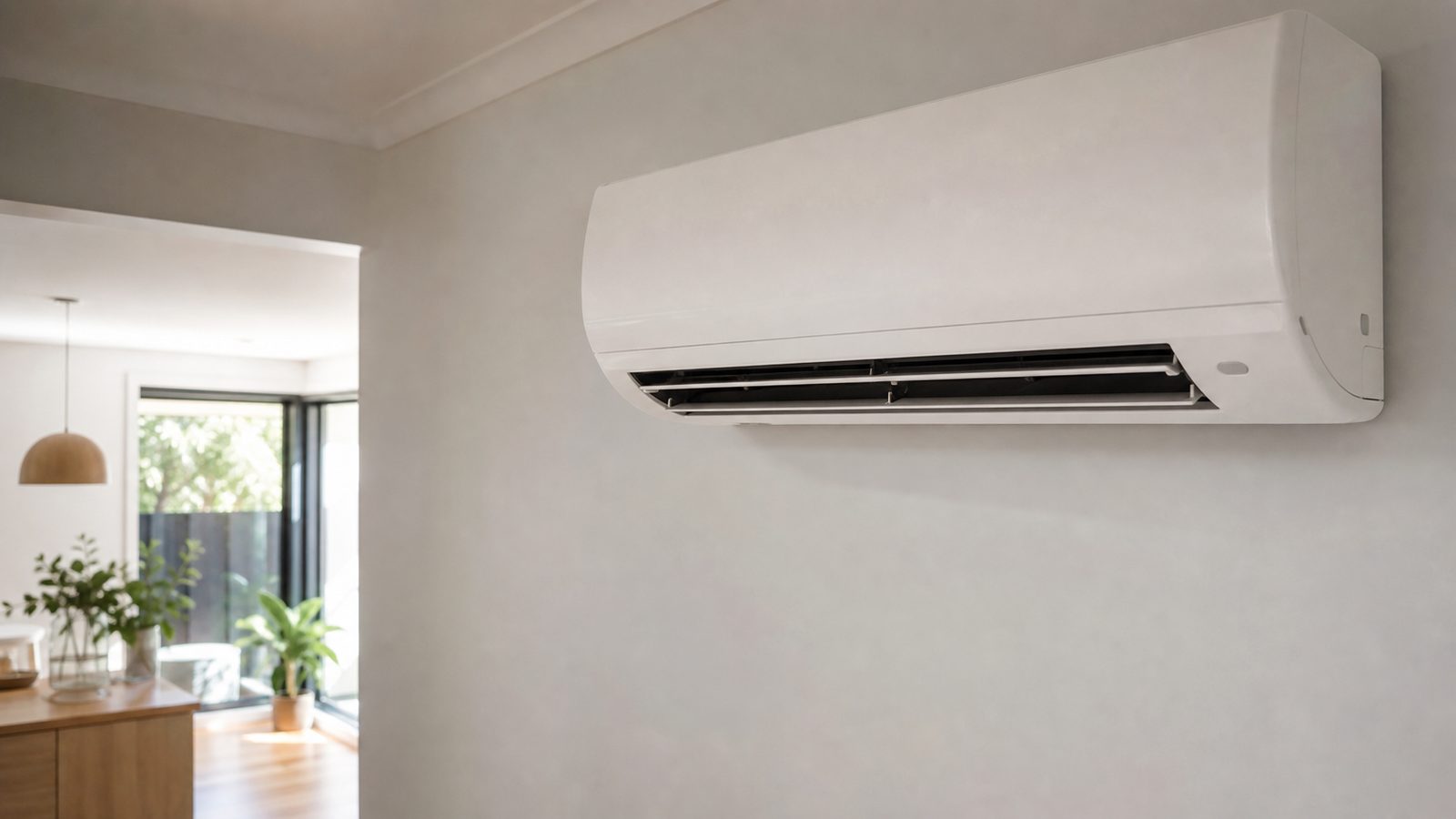
Photograph the indoor unit from within the room and identify the apartment and room in your own booking notes. Show the furniture below it, nearby cabinetry and any unusual ceiling or doorway arrangement. Keep private documents and other occupants out of the image. A view of the whole work area is generally more useful for access planning than a close-up of a brand badge.
Describe the outdoor equipment only from an area you can normally and safely access. It may be on your balcony, in a screened area, on common property or out of sight. If you cannot identify it, say so. Do not lean over a balustrade, enter a roof space or open a service cupboard to obtain a photograph for a routine enquiry.
Existing building or installation records may identify which outdoor unit serves your apartment. Send the relevant description if available, while allowing the provider to verify it on site. Equipment serving another lot can look identical. Guessing from proximity can lead to the wrong access request or an inaccurate scope, particularly where several outdoor units sit together in a shared enclosure.
Plan the route from the street to the room
Ask the building contact how visiting contractors normally arrive. Record the correct entrance, intercom details and any agreed loading or parking arrangement. Do not tell a provider to use a resident's space unless its use has been agreed. A vehicle arriving at the wrong gate can lose the appointment window even when the indoor unit itself is straightforward to reach.
For lift access, check whether a booking, protective lining or other building arrangement applies to the visit. For stairs, tell the provider which floor and describe any narrow turn or long carry route. These facts help them decide what equipment and assistance are appropriate. Avoid promising that any cleaning setup will fit simply because residents regularly carry shopping through the same route.
Keep access information in a private booking message. Public descriptions of your building do not need entry codes or key locations. Confirm who will meet the contractor and what happens if the intercom fails. A nominated contact who can answer during the arrival window is more useful than a long list of residents who may not be present.
Resolve common-area questions with the building contact
If the job requires a shared corridor, plant enclosure or other controlled space, describe that need before the visit is confirmed. Ask the building contact what arrangements apply and pass them to the provider. Requirements can differ between buildings and jobs. This guide does not supply a standard permission letter or claim that cleaning always requires a particular approval.
Explain any proposed movement of hoses, protective coverings or equipment through common areas. The provider and building contact need to agree an arrangement that keeps access routes usable and deals with the working area. Do not improvise by propping open secured doors or placing equipment across a corridor because the contractor has already arrived. Resolve the route as part of preparation.
Where responsibility for a component is disputed or unclear, keep the issue separate from the accessible indoor cleaning scope. It may be possible to agree a limited visit, but the provider should state what remains excluded. Keep the unresolved item in writing and name the contact who will clarify it. Silence from a building contact is not confirmation that access or work is authorised.
Treat a balcony as a work location that needs assessment
A private balcony is not automatically a suitable work area. Tell the provider about fixed planters, furniture, screens and the position of outdoor equipment. A unit behind a heavy enclosure or close to an edge may need an approach that differs from a clear ground-level installation. The provider must assess the working position; the resident should not remove protective barriers to make access easier.
Record whether another balcony or common path sits below the area. Discuss containment and protection with the provider rather than assuming water can be released over the edge. Do not use a pressure washer on the equipment or try to prewash it before the appointment. Preparation means describing the area and moving ordinary safe-to-handle belongings as agreed, without altering the installation.
Weather can change the suitability of outdoor access even while the indoor room remains usable. Ask who will decide whether the planned outdoor part can proceed and how that affects the visit. If it is postponed, the completion record should distinguish the indoor work from anything still outstanding. An indoor clean does not establish the condition of inaccessible outdoor equipment.
Ask where cleaning water and condensate will go
Indoor washing requires a planned method for containing and handling the water used by the provider. Ask how nearby walls, furnishings and flooring will be protected, and what access the method requires. Do not assume an apartment floor drain is suitable for any wash water. The provider should explain their handling arrangements and account for the products they propose to use.
Keep that question separate from the air conditioner's normal condensate route. A cleaning collection arrangement and the installed drain serve different purposes. If there has been indoor leakage, tell the provider whether the drain route is known or suspected to join shared infrastructure. Do not attempt to clear it with chemicals or tools, and do not authorise work on unknown shared piping by guesswork.
Where a leak affects a neighbouring lot or common area, notify the appropriate building and property contacts promptly through the normal process. Record the location and any visible impact without assigning a cause. A cleaner's access may be limited to your apartment, so additional assessment might need separate coordination. Keep the reported building concern visible rather than reducing the enquiry to a dirty indoor unit.
Prepare the occupied room without creating another obstruction
Ask what space the provider needs beneath and beside the head. Move small personal items you can handle safely, then leave heavy furniture decisions for discussion. If a bed or desk cannot move, show it in advance. The provider may be able to protect it, may need a different method or may advise that access must be resolved before the clean.
Choose somewhere for occupants and pets away from the active work area. In a small apartment, moving everything into a hallway may block the contractor's only route. A staged room arrangement can be more practical, provided it is agreed. Explain if the apartment has only one usable living space or if somebody needs an uninterrupted room during the proposed appointment.
Identify existing marks on walls, flooring and cabinetry before work begins, using ordinary photographs where helpful. This is a shared reference for protection and completion, not a claim that damage is expected. Discuss anything especially vulnerable, such as artwork, electronics or finishes directly beneath the unit. Let the provider decide how those items affect the method and whether they need to be relocated.
Keep tenant, owner and manager instructions consistent
If you rent, explain your concern to the property manager or owner and ask how the cleaning or assessment request should proceed. Keep their instructions with the appointment details. Do not assume that an online quote request establishes who pays or authorises additional work. This guide helps organise a visit and does not decide tenancy responsibility or substitute for current official guidance.
If you own the apartment but cannot attend, nominate a contact who understands the agreed scope. State whether that person can approve changes or only provide access. Give the provider a route to reach the decision-maker if a new issue is found. A contractor should not have to infer financial authority from the person holding the apartment key.
Confirm what the provider should do if an issue lies outside the agreed clean. Electrical work belongs with an appropriately licensed electrical professional, and refrigerant work needs relevant licensing. Ask for the finding to be documented before further work is arranged. A service-area key or a body corporate contact does not establish that the attending person has credentials for every task.
What should the apartment visit record explain?
The report should identify your apartment's equipment, the accessible areas worked on and any exclusions. If the outdoor unit or drain connection could not be reached, that limit should remain explicit. Photos should be labelled so the building contact can understand which unit they show without confusing it with another apartment's equipment. Keep the record with your unit inventory and approval correspondence.
Ask the provider to distinguish observations from conclusions. A note saying water was visible below a head describes a condition; a statement assigning the cause to common property requires appropriate investigation. Where the cause is unresolved, share the observation and the proposed next assessment. Do not turn an incomplete cleaning report into a definitive claim about the building or a neighbour.
At completion, confirm that the agreed working areas and access route have been left usable and that keys or access devices are accounted for. If a separate visit remains necessary, name its purpose and the person arranging it. A contractor's departure should not leave the resident, manager and body corporate each assuming that somebody else will organise the next step.
A practical example of an access brief
Consider an apartment with one living-room head above a fixed cabinet and an outdoor unit in a locked common enclosure. The resident can provide apartment entry but cannot open the enclosure. A useful brief states both limitations and names the building contact. It asks whether the indoor scope can proceed independently and what access is required for any proposed operating checks.
If the building contact can only attend during a particular window, agree that before confirming the contractor's arrival. If access cannot be arranged, do not promise a complete indoor-and-outdoor visit. Request a clearly limited scope or reschedule the part needing access. The final record should show what happened, rather than treating the common enclosure as assessed because the technician entered the apartment.
The access builder below turns your selections into questions for those conversations. It deliberately leaves legal responsibility and permission to the appropriate records and people. Use it to expose unknowns early: equipment location, drain route, arrival process and authority to approve work. Resolving those items makes the eventual cleaning request more precise and reduces avoidable disruption inside the building.